Blockchain Layers

Blockchain Layers

December 07, 202513 min read

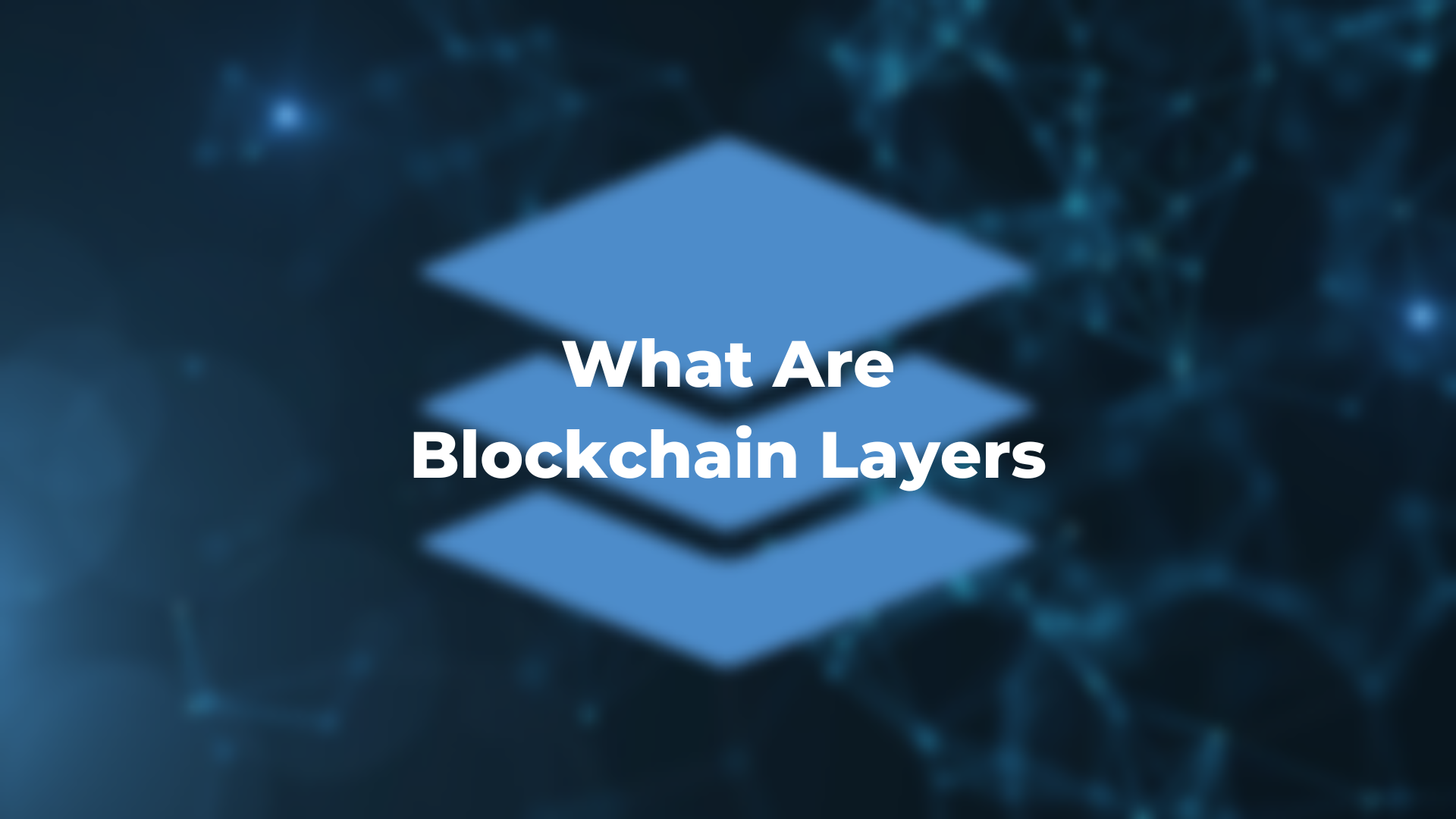
What are Blockchain Layers?

In previous blogs, we’ve discussed “What is a Blockchain?” as well as what are some examples of Blockchains and how different companies are utilizing this technology. In this blog, we wanted to dive a little deeper into the technology and build upon that existing knowledge.

A Layer 1 Network or Layer 1 Blockchain is one that can validate and complete its own transactions without the help of another network or blockchain.   Examples of Layer 1 technology are Bitcoin, Ethereum, BNB Smart Chain, and Solana.  A Layer 2 Network or Blockchain is one that relies on another network solution (Layer 1) to complete transactions.  An example of this is the Lightning Network (Layer 2) and how it utilizes Bitcoin’s network technology (Layer 1).

There are advantages of being a Layer 2 technology.  Layer 1 blockchain protocol can have scalability issues slowing down transaction times.   This can create situations where Layer 2s can supplement the data processing of an L1 and speed up some transactions. In the example of the Lightning/Bitcoin relationship, the Lightning network has the ability to make transactions faster than Bitcoin and then report back the end results to the Bitcoin network to verify and record the details creating a faster and more user-friendly experience.  Another example of a similar relationship is the Polygon Network (L2) and Ethereum (L1).

An extremely over-simplified analogy of this would be a traffic jam on an Interstate where your Waze app says that you can save time by taking an off-ramp to a surface road, bypassing the traffic jam using surface streets and get back on the Interstate at the next on-ramp.   Of course, in this example, the Interstate would be an L1 and the surface road would be L2.

Just like there are different types of blockchains to achieve different solutions, there are different types of algorithms that they run on. These Consensus Algorithms are procedures in which all network participants (whether they be miners, nodes, validators, etc) all reach an agreement on the validity of the recently grouped block of data.

This is in no way a complete list, but some of the more popular types of consensus algorithms are Proof-of-Work, Proof-of-Stake, Proof-of-Action, and Proof-of-Authority. We’ll dive deeper into each of these algorithms in a future blog.

Back to Blog

Important Notices

Digital Assets and Custody are provided by Ibanera LLC and Vault IST DMCC. Ibanera LLC and Vault IST DMCC are not insured depository institutions or banks. Digital assets are not legal tender, are not insured by the Federal Deposit Insurance Corporation ("FDIC"), and are not subject to protections afforded to bank deposits. Digital assets are subject to extreme price volatility and may lose value. Digital assets held in your digital asset account (i.e. rewards wallet or trade wallet) are not insured by any governmental entities, including but not limited to FDIC. As with any asset, the value of digital assets can go up or down and there can be substantial risk that you lose money buying, selling, or holding, in digital assets. You should carefully consider whether trading or holding digital assets is suitable for you in light of your financial condition. No bank guarantee and may lose value.

Switch Nodes and the Switch Blockchain are governed by a Distributed Governance Framework, which is distinct from and not controlled by Switch Reward Card DAO LLC (Switch Reward Card). Any value derived from Switch Nodes and Switch Rewards is likely to be uncorrelated with the success or failure of Switch Reward Card.

Switch Reward Card does not sell digital rewards. The Switch Blockchain, which is governed by Switch Node owners, self-governs the distribution of Switch Rewards. Switch Rewards are earned in exchange for work and action on the Switch platform. Switch Rewards are digital rewards designed to have utility on the Switch platform for the purchase of Switch's products and services. Switch Rewards is not an investment product and may never have any value outside of the Switch platform. Switch Node owners should not expect to recognize any value from Switch Rewards other than its utility on the Switch platform. Switch Reward Card does not anticipate correlation between Switch Rewards' value and Switch Reward Card's business activities.

Banking services including USD deposits are provided by Cross River Bank.

Switch Reward Card, DAO, LLC operates as a registered Money Services Business (MSB) with the Financial Crimes Enforcement Network (FinCEN). We are also a proud participant in the FinCEN 314(b) voluntary information-sharing program to help detect and prevent money laundering and terrorist financing.

SWITCH REWARD CARD RESERVES THE RIGHT TO CHOOSE MARKETS AND JURISDICTIONS TO CONDUCT BUSINESS, AND MAY RESTRICT OR REFUSE, IN ITS DISCRETION, THE PROVISION OF SWITCH SERVICES IN CERTAIN COUNTRIES OR REGIONS.

SWITCH ERC-20 Contract Address: 0xb10cc888cB2CcE7036F4c7ECAd8a57Da16161338

© 2026 Switch. All rights reserved | Privacy Policy | Terms